Post-election: Railroads look OK; rail labor, Amtrak not so good

What does Senate Republican control and the largest House Republican majority since the 1940s mean for railroad reregulation, Amtrak’s future, high- and higher-speed rail, transit funding, Positive Train Control (PTC), corporate tax reform, short line tax credits, the future of coal, and a minimum crew-consist mandate?

Rereg legislation was kaput well before this election. Amtrak, on the other hand, best find a secure hideaway that is “posted” against hunting, because come January, it will be open season on passenger train subsidies. The Republican-controlled House already has closed the books on high- and higher-speed rail funding; and Republicans, as a rule, aren’t too generous with transit. Legislative attempts to mandate two-person train crews? Fuggetaboutit.

As for the other rail-related issues, including highway funding, the forecast is more clouded.

Note that before the seating of the 114th Congress in January, we must endure a lame duck session of the dysfunctional 113th. Putative Senate Majority Leader Mitch McConnell (R-Ky.) said, however, that he would defer to the 114th Congress most major legislation, preferring that the remainder of the current Congress—in lame duck session—concentrate only on so-called continuing resolutions that keep existing programs funded, as well as moving some tax bills such as tax credits (Section 45G of the Tax Code) for short line railroad capital spending programs. Until January, Harry Reid (D-Nev.) remains in control of the Senate docket.

Rail labor most certainly is the biggest Election Day loser. With a new round of national contract negotiations about to commence, the increased number of anti-labor conservatives in both chambers portends treacherous shoals should an impasse lead to a threatened work stoppage and congressional intervention.

Especially alarming to the operating crafts representing conductors is the ennui among Democrats attending legislation to mandate two-person train crews. Most Republicans will have nothing to do with such mandates.

Separately, the departure of FRA chief Joe Szabo (http://www.railwayage.com/index.php/regulatory/fras-szabo-headed-back-to-chicago.html?channel=40) places in even greater jeopardy his personal cabal with rail labor to mandate, via an FRA rulemaking, two crew members on every train absent supporting data, or recognition of the purpose and capabilities of soon-to-be implemented PTC(http://www.railwayage.com/index.php/blogs/frank-n-wilner/data-phobic-fras-book-of-mormon%E2%80%9D.html). While not yet consigned to the dust bin of history, such an FRA initiative is likely now to disappear with Szabo’s departure.

Railroads properly lament the Election Day loss of Rep. Nick Rahall (D-W.Va.), the senior Democrat on the House Transportation & Infrastructure Committee. Although not always a fellow traveler with railroads, Rahall fully understood the negative implications of reregulation legislation and the convolutions attending too-hastily-mandated implementation of PTC.

Rahall’s sudden and unexpected availability is propagating speculation he could be Szabo’s successor at the FRA, or be headed to the lobbying shops of the Association of American Railroads, CSX, or Norfolk Southern. Informed supposition also has Rahall headed to the STB should Chairman Dan Elliott depart that Democratic seat. Elliott has been awaiting renomination to a second term for more than a year, and must depart, by statute, Dec. 31 if not renominated and confirmed by the Senate. (http://www.railwayage.com/index.php/blogs/frank-n-wilner/sen-durbin-emerging-as-stb-chairmans-nemesis.html?channel=62)

Succeeding Rahall as the ranking Democrat on the House Transportation & Infrastructure Committee will be Peter DeFazio (D-Ore.), known to relish, unlike Rahall, the occasional partisan quarrel. Committee Chairman Bill Shuster (R-Pa.), and Rail Subcommittee Chairman Jeff Denham (R-Calif.), gain greater strength owing to the Republican pick-up of at least 14 House seats. Florida’s Corrine Brown is likely to remain ranking Democrat on the rail subcommittee.

Most freight railroad concerns are not at great risk within the T&I Committee, although Republicans there—and on the Ways and Means Committee that considers tax policy—are chary to upset long-standing policy that funds highway construction through a per-gallon fuels tax. Economic efficiency augurs, instead, for a user fee based on axle weight and distance traveled, which would more properly match pavement damage responsibility, yet increase trucker costs. Railroad intermodal market share and intermodal pricing are sensitive to shifts in motor-freight fuel costs. DeFazio has expressed a third approach to highway funding: taxing crude oil at the refinery and linking the tax to inflation.

Often ignored is the House Appropriations Committee—specifically, its Transportation Subcommittee. Although guided by T&I authorizations, the Appropriations Committee effectively controls transportation funding. Subcommittee chairman Tom Latham (R-Iowa) is retiring at year-end, as is the second senior Republican, Frank Wolf (R-Va.). Who will move up or over (from another committee) as chairman is not clear. The Democrats’ ranking member, Ed Pastore of Arizona, is retiring.

Senate changes

On the Senate side, railroads silently welcome the retirement of Commerce Committee Chairman Jay Rockefeller (D-W.Va.), who has spent three decades mocking railroad deregulation. Republican control will move Sen. John Thune (R-S.D.) into the chairmanship—another railroad baiter, but not nearly as caustic and shrill as Rockefeller. Sen. Bill Nelson (D-Fla.) will be the ranking Democrat. Attempts at intimidating the allegedly independent Surface Transportation Board to bend to shippers will likely will ebb with Rockefeller gone.

While Senate Republicans have never stood as firmly as House Republicans in opposition to railroad reregulation, a Republican-controlled Senate is considered less perilous than under Democratic control. Look for Ray Blunt (R-Missouri) to chair the Commerce Committee’s Surface Transportation Subcommittee.

As with the House, the Senate Appropriations Committee—again, its Transportation Subcommittee—controls transportation funding. Sen. Susan Collins (R-Maine) will move to the subcommittee chairmanship in place of Washington-state Democrat Patty Murray. Collins and Murray jointly have exhibited support for federal funding assistance of short line railroad safety initiatives.

In the Senate Finance Committee, where tax decisions are made, Sen. Orin Hatch (R-Utah), who opposes an increase in motor fuels taxes, and who might, of necessity, embrace a more economically efficient alternative, is in line for the chairmanship. Hatch could also support, as do other conservatives, shifting the highway tax burden from the federal government to the states, but that could adversely impact a seamless national highway network. The current chairman is Ron Wyden (D-Ore.).

The separate authorizing committee for a new highway bill is Environment & Public Works, which will be chaired by Sen. Jim Inhofe (R-Okla.), a rare conservative who advocates increased infrastructure spending. Sen. Barbara Boxer (D-Calif.) currently is chairman. The committee’s Transportation & Infrastructure Subcommittee will be chaired by John Barrasso (R-Wyo.). It currently is chaired by strong highway spending advocate Tom Carper (D-Del.).

The Senate Banking Committee’s Transportation Subcommittee, which authorizes transit programs, will be chaired by Jerry Moran (R-Kans.). The current chairman is Robert Menendez (D-N.J.), whose constituents are heavily dependent on public transportation.

The macro view is that, notwithstanding Republican Senate control, Republicans lack a super-majority of 60 votes needed to choke minority party opposition to proposed legislation. As a general rule, if a bill does not have a minimum of 60 supporters, it is not brought to a floor vote. Yet with an increased number of tea party conservatives having been elected, and expected to put pressure on moderates such as McConnell (R-Ky.), bare knuckles fighting may be in store.

Already, McConnell has threatened to take the nation to the brink of another government shutdown if Democrats interfere with a conservative Republican legislative agenda next year. Prior to the election, McConnell said, “Make me the majority leader … and we’ll put points on the board and take America in a different direction.” Post-election he promised a more conciliatory approach.

In fact, the politics of the upcoming 114th Congress things could get terribly brutal, but Republicans must weigh their tactics in light of the 2016 presidential election. Not to be ignored is that while a majority of Americans age 45 and older are more supportive of Republicans, Americans under age 44—and especially between the ages of 18 and 29—are more favorably disposed to Democrats, according to a Washington Post analysis. Such numbers have longer term political implications.

If history is a guide, George W. Bush, Bill Clinton, and Ronald Reagan spent their final two years in office—as will President Obama—with the opposition party in control of Congress.

A billion here, a billion there

By the way, did you know that, collectively, Democrats and Republicans spent $5.6 billion over this two-year election cycle supporting their candidates and lobbying for preferred legislative outcomes? The U.S. Chamber of Commerce alone spent $160 million. Furthermore, according to data compiled by the non-partisan Center for Responsive Politics:

BNSF and its officers and employees contributed $3.4 million to candidates, political parties, and an array of political action committees (PACs); and spent $3.9 million on congressional lobbying activities.

CSX contributed $2.7 million toward election outcomes and spent another $5.7 million in expenses related to lobbying Congress.

Norfolk Southern contributed $1.9 million toward election outcomes and spent another $5.1 million on lobbying.

Union Pacific contributed $2.5 million toward election outcomes and spent another $9.9 million on lobbying.

The Association of American Railroads spent $11.5 million on lobbying.

The American Short Line and Regional Railroad Association spent $800,000 on lobbying.

Among labor unions, the United Transportation Union (now the Transportation Division of SMART), spent $2.1 million on lobbying, while the Brotherhood of Locomotive Engineers spent $1.1 million.

By contrast, Dow Chemical and the Edison Electric Institute—each advocating railroad reregulation—spent $23 million and $17 million, respectively, on lobbying activities.

Humorist and author P.J. O’Rourke termed Congress, in his best-selling book, “A Parliament of Whores.” We prefer the lifetime achievement of Nobel laureate economist James Buchanan, whose public choice theory explained that those in the public sector are driven by the same incentives as those in the private sector—rational self-interest. That’s what makes capitalism and democracy the very worst systems—except, of course, for all the others.

UTU Cartoon

U.S. roads set intermodal volume records in October

In October, U.S. Class Is originated 1,507,917 carloads, up 4.4 percent compared with October 2013 volume. Weekly carloads averaged 301,583, only the third time since 2008 that the weekly average exceeded 300,000 units in a given month, according to the Association of American Railroads (AAR).

U.S. Class Is also handled 1,381,749 containers and trailers in October, up 4.9 percent year over year and the highest monthly total in history, AAR officials said in a press release. The weekly average of 276,350 containers and trailers also set a record and October became the 59th-straight month of year-over-year intermodal gains, they said. In 2014’s first 10 months, U.S. intermodal volume reached a record 11,459,079 units, up 5.5 percent versus the same 2013 period.

Excluding coal, U.S. carloads rose 4.7 percent in October. Excluding coal and grain, carloads increased 5.4 percent. Fifteen of 20 carload categories posted gains, led by petroleum and petroleum products at 20.7 percent, crushed stone, sand, and gravel at 10.4 percent, metallic ores at 11.4 percent and coal at 3.9 percent.

“America’s railroads are moving an enormous amount of freight today. In the first 10 months of 2014, total U.S. carload plus intermodal volume was 24.3 million units, which is over 1 million units more than in the first 10 months of 2013 and the highest year-to-date total since 2007,” said AAR Senior Vice President John Gray.

For the week ending Nov. 1, U.S. railroads originated 305,389 carloads, up 4.3 percent, and 279,819 intermodal units, up 5.9 percent year over year. Canadian railroads’ weekly carloads rose 4.4 percent to 86,893 and their intermodal volume climbed 10 percent to 60,312 units, while Mexican railroads’ carloads dropped 8.7 percent to 14,247, but their intermodal volume increased 6.7 percent to 10,632 units.

Through 2014’s first 44 weeks, 13 reporting U.S., Canadian and Mexican railroads handled 17,068,124 carloads, up 3.2 percent, and 14,455,151 containers and trailers, up 5.7 percent compared with the same 2013 period.

Irregular Sleeping

Article from the  LA TIMES

Working an irregular schedule that includes afternoon and night shifts can seriously sap your brain power, new research shows.

For people who spent more than a decade on this type of rotating shift schedule, the effects were equivalent to 6.5 years of normal age-related cognitive decline, according to a study in the journal Occupational & Environmental Medicine.

But people who were currently working a rotating schedule had worse scores – the equivalent of 5.8 years of age-related decline. Even worse were people who had stopped working a rotating schedule within the last five years; their scores indicated the equivalent of 6.9 years of age-related cognitive decline.

When the researchers expanded the analysis to include people who experienced any kind of irregular work schedule, the results were similar.

All of the data came from VISAT, a long-term study of salaried workers from southern France.  The workers, who held a wide range of jobs, were given questionnaires and clinical exams up to three times over a 10-year period. A total of 3,232 workers were included in the study; of them, 1,484 (46%) said they had worked irregular shifts at some point in their careers.

Previous studies have found that work schedules that are out of sync with the body’s natural circadian rhythm can harm mental function. For instance, airline crews that experienced frequent jet lag and didn’t get enough time to recover got poor results on tests of their cognitive abilities. Industrial workers assigned to odd shifts did worse on memory tests compared with their counterparts who only worked days. And nurses who sometimes worked nights got lower marks on tests of general cognition.

RG Negrete

Brothers,


A fellow Brother, retired engineer Ruben G. Negrete, is ill and in the

hospital with cancer.

He was an SP fireman (June 1976) & engineer (April 1977) for twenty years,

before coming over to Amtrak in February 1997. He worked out of Oakland and

LA for the SP, and out of Oakland and Sacramento for Amtrak. He was also a

former President of Division 144 – Amtrak.

I am requesting your help as presidents of divisions that may have former SP

employees, to spread this info to your division members. I am simply looking

for old friends of Ruben’s who might have the time to visit or send him a

card.

He is currently at the VA Hospital in Los Angeles, at 11301 Wilshire

Boulevard. It’s right off the San Diego Freeway (I-405) in West LA. He is in

ward ‘3 South’.

If anyone can go and visit I am sure it would boost his spirits to see old

friends from the SP.


Revised Trip Rate JP016 RE31

Brothers,

 Up Has increased their offer on the JP016 RE31 Pool, The members voted at last months meeting for a yearlong  TPA (test period

average). Please contact us and we can discuss what was offered and how we would like to move forward. Remember you must be a

Division 5 member in order to vote on this issue.

D5 Front Print Ready

Union Pacific Reports All-Time Quarterly Records…again

Thats great….but as sure as the sun will rise tomorrow, they will claim poverty on our next round of bargaining.

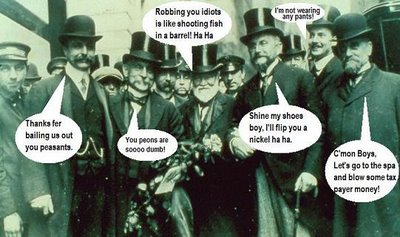
Robber Baron – A term applied to a businessman in the 19th century who engaged in unethical and monopolistic practices, wielded widespread political influence, and amassed enormous wealth.

  robber_barons_2

Union Pacific Reports All-Time Quarterly Records

Third Quarter Diluted Earnings per Share up 23 Percent

OMAHA, NEB., OCTOBER 23, 2014

Union Pacific Corporation (NYSE: UNP) today reported 2014 third quarter net income of $1.4 billion, or $1.53 per diluted share, compared to $1.15 billion, or $1.24 per diluted share, in the third quarter 2013.

All-Time Quarterly Records

  • Diluted earnings per share of $1.53 improved 23 percent.
  • Operating revenues totaled $6.2 billion, up 11 percent.
  • Operating income totaled $2.3 billion, up 19 percent.
  • Operating ratio of 62.3 percent improved 2.5 points.

“Union Pacific achieved record quarterly financial results, leveraging the strengths of our diverse franchise to handle strong volume growth,” said Jack Koraleski, Union Pacific chief executive officer. “As we continue to focus on improving our service, we are encouraged by the accomplishments we achieved in the quarter, including a two and a half point improvement in our Operating Ratio to a record 62.3 percent.”

Third Quarter Summary

Operating revenue increased 11 percent in the third quarter 2014 to $6.2 billion, versus $5.6 billion in the third quarter 2013. Third quarter business volumes, as measured by total revenue carloads, increased 7 percent compared to 2013. Volume increased in agricultural products, industrial products, intermodal, automotive and chemicals. Coal volumes were flat versus 2013. In addition:

  • Quarterly freight revenue increased 11 percent compared to the third quarter 2013, driven by volume growth and core pricing gains.
  • Union Pacific’s operating ratio of 62.3 percent was an all-time quarterly record, 2.5 points better than the third quarter 2013 and 1.2 points better than the previous all-time quarterly record set in the second quarter 2014.
  • The average quarterly diesel fuel price of $3.01 per gallon in the third quarter 2014 was down 5 percent compared to the third quarter 2013.
  • Quarterly train speed, as reported to the Association of American Railroads, was 23.8 mph, 10 percent slower than the third quarter 2013.
  • The Company repurchased more than 8.3 million shares in the third quarter 2014 at an average share price of $102.54 and an aggregate cost of $856 million.

Summary of Third Quarter Freight Revenues

  • Industrial Products up 19 percent
  • Agricultural Products up 19 percent
  • Intermodal up 15 percent
  • Chemicals up 6 percent
  • Automotive up 3 percent
  • Coal up 2 percent

2014 Outlook

“We are optimistic about the remainder of the year,” Koraleski said. “Assuming the economy and weather cooperate, we are well positioned to finish up the year with record results. We continue to see tremendous opportunity across our diverse franchise and remain focused on improving our network velocity and fluidity so that we can leverage these opportunities by safely providing our customers with excellent service and our shareholders with strong returns.”

About Union Pacific

Union Pacific Railroad is the principal operating company of Union Pacific Corporation (NYSE: UNP). One of America’s most recognized companies, Union Pacific Railroad connects 23 states in the western two-thirds of the country by rail, providing a critical link in the global supply chain. From 2004-2013, Union Pacific invested approximately $30 billion in its network and operations to support America’s transportation infrastructure. The railroad’s diversified business mix includes Agricultural Products, Automotive, Chemicals, Coal, Industrial Products and Intermodal. Union Pacific serves many of the fastest-growing U.S. population centers, operates from all major West Coast and Gulf Coast ports to eastern gateways, connects with Canada’s rail systems and is the only railroad serving all six major Mexico gateways. Union Pacific provides value to its roughly 10,000 customers by delivering products in a safe, reliable, fuel-efficient and environmentally responsible manner.


4/1 pilot program abuse

Brothers;

 We currently DO NOT have the 4/1 pilot program in Los Angeles, Gemco or Dolores. We are trying to get it, but if you illegally call CMS on your own behalf and try to tie-up for 22:01 you will be removed from the extra board for 48 hours , timekeeping will be notified and your guarantee will be forfeited FOR THOSE DAYS . We cant have some people trying to be free agents and do whatever they want while everyone else follow the rules.

Article 32 section section 6(k) SP West allows the Local chairman or General chairman to remove Engineers who are abusing the system.

download (2)Sharp-Shooter-Hat-big


hannah-to-foley-9-24-14-4-n-1-pilot-projects

gc-to-5-56-660-5-24-14-4-and-1-pool-voluntary-2201-tie-up

4 1 extension

Alameda Corridor authority to mark grade separation’s start in L.A. area

The Alameda Corridor-East Construction Authority (ACE) plans to hold a ceremony today to mark the start of construction on a $99.6 million grade separation in Industry, Calif.

A four-lane roadway underpass will be built on Puente Avenue and a railroad bridge will be constructed to carry Union Pacific Railroad trains over Puente Avenue and Workman Mill Road. To be completed in early 2018, the project will enable local officials to close a grade crossing, eliminating train/vehicle collisions, traffic congestion and train-horn noise in the area, ACE officials said in a ceremony announcement.

Located on the high-volume transcontinental Alameda Corridor-East rail corridor, Puente Avenue has registered five collisions over the past 10 years, causing three fatalities and one motorist injury, they said. By 2025, daily rail traffic at the crossing is projected to more than double from 20 to 42 trains.

“Without the project, crossing delays will more than double by 2025 or will more than triple if the railroad mainline is double tracked,” ACE officials said.

Dignitaries invited to the ceremony include U.S. Reps. Grace Napolitano (D-Calif.), Ed Royce (R-Calif.) and Judy Chu (D-Calif.); State Sens. Ed Hernandez and Norma Torres; Assembly members Ed Chau, Freddie Rodriguez and Roger Hernandez; California Transportation Commissioner Fran Inman; Los Angeles County Metropolitan Transportation Authority Chief Executive Officer Art Leahy; and Industry Mayor Tim Spohn.

The project is part of an ACE program involving the construction of 21 grade separations in the San Gabriel Valley along freight-rail mainlines used to move goods to and from San Pedro Bay ports.

puente_ave_gs


Union Meeting Tuesday 10/21/14

Brothers and Sisters,


Please try and join us at our October meeting Tuesday October 21 2014 10:30 am (Teamsters joint council #42  981 Corporate Center Dr #200, DeVry University Pomona Campus,Pomona, CA 91768)

We will be discussing our 2014 IWC

our BLET 3rd national convention –http://www.ble-t.org/convention/Default.aspx.

Changes to Union Pacific’s Discipline policy (huge changes)

RE31- trip rates, pool trades,mileage regulations

RE21- flip/trip rates ,pool trades, patching.

If you are a engineer working on the re31 pool (who is a division 5 member) you need to be at the meeting to vote on trip rates.

We have some packets that are being mailed out from Cornerstone insurance. They have put together a package for all BLET Western Lines members, with an open enrollment starting 11/01/14 thru 01/15/15 .

It includes Life Insurance, AD&D, Short- term disability, Long – Term Disability. the only eligibility requirement is that you be working when the policy goes into effect.

UP Western Lines Paperwork

Cornerstone-Assurance-Group logo


I hope to see alot of people at the meeting , we have alot to cover.

LUNCH WILL BE PROVIDED


Fraternally

Paulo


Open enrollment begins November 1, 2014 for the BLET Short Term Disability Plan

From BLET.org

Open enrollment begins November 1, 2014 for the BLET Short Term Disability Plan – Important Changes and Enhancements to Plan B CoverageCLEVELAND, October 9 — Open Enrollment for 2015 under the BLET’s Short Term Disability insurance plan begins on November 1, 2014 and runs through December 15, 2014.

If you are a locomotive engineer working on a railroad that participated in the Wage/Rules portion of the National Agreement dated December 16, 2003 (as an example; BNSF, NS and Amtrak did not participate in this Plan so this information does not apply to engineers working on these properties), your coverage under Part A (described below) of the BLET Short Term Disability Plan will automatically continue.

If you currently do not participate in Part B coverage (also described below), you may elect coverage during this enrollment period. If you currently participate and wish to opt out of Part B coverage, then you can also do so during this enrollment period.

Part A — NON-OCCUPATIONAL DISABILITIES

There will be no changes to Part A coverage:

• Your eligibility and $40 premium is submitted by the railroad on a monthly basis.
• Part A pays $402 per week for non-occupational disabilities only, up to 52 weeks’ coverage.
• Occupational disabilities are not covered.
• Each eligible member is insured for $50,000 of Accidental Death and Dismemberment (AD&D) coverage.
• There is a 14-day waiting period.

Part B — OCCUPATIONAL DISABILITIES

The premium cost for Part B coverage was reduced significantly to $18 per month in 2014. In addition, if you currently participate in Part B coverage or are currently eligible for Part A and enroll in Part B coverage, Part B will now also cover non-occupational disabilities in the case that you are demoted to train service and become ineligible for Part A coverage.

Part B is voluntary. Participation in this additional occupational coverage is not required.

• The weekly benefit for occupational disabilities is $402 per week, up to 52 weeks.
• Each eligible member is insured for an additional $50,000 of AD&D coverage. When participating in both Part A and Part B there is a total of $100,000 of AD&D coverage.
• The benefit is not subject to repayment upon receipt of a FELA settlement (no repayment after a personal injury settlement).
• The benefit is not considered taxable income.
• The Part B premium will be paid either via a payroll deduction or via an automatic monthly direct withdrawal authorization arranged with your banking/financial institution.
• There is a 14-day waiting period.

NOTE: SMART-TD members working as engineers are eligible for Part A and may purchase Part B coverage by making an annual payment of $216 to the BLET Short Term Disability Trust Fund. (Complete the form at the link below and return to address noted by December 15, 2014.)

FILING A CLAIM FOR BLET SHORT TERM DISABILITY

• Call 1-800-858-6506 – MetLife Claim Center.
• Tell them you would like to file a claim under BLET Short Term Disability.
• Provide information requested, including contact information for your attending physician(s).
• A Case Manager will be assigned and you will receive a file number, which you must keep available for future reference.
• Following the call, you will receive an authorization for release of medical information.
• Sign the document and return to MetLife.

IMPORTANT:
Your initial eligibility for Part B remains dependent upon your eligibility for Part A. In order to be eligible for Part A, you must have seven (7) starts in a month (with at least one (1) start as an engineer) prior to enrolling for coverage.

If you are enrolled in Part B and are demoted to train service and become ineligible for Part A coverage you will no longer have to notify the Secretary-Treasurer of your local division. Your Part B coverage will automatically cover you for both occupational and non-occupational disabilities until you (1) again become eligible for Part A, (2) elect to discontinue your payroll deduction for Part B coverage, or (3) are no longer a locomotive engineer working on a railroad that participated in the Wage/Rules portion of the National Agreement dated December 16, 2003.

CHOICES THAT MUST BE MADE BY DECEMBER 15, 2014

If you currently do NOT participate in Part B and choose to do nothing, you will continue to be eligible for Part A coverage only. If you are currently enrolled in Part B and wish to remain enrolled, then you are not required to take any action.

If you currently do NOT participate and would like to sign-up for Part B coverage during this open enrollment period, or if you DO currently participate and would like to opt-out of Part B coverage, you must complete and return the attached form (link below), by December 15, 2014, to the Secretary-Treasurer of your local division. Your election will become effective on January 1, 2015.

Members, who OPT-OUT of Part B coverage effective January 1, 2015, will not be eligible to enroll for the coverage until the next annual enrollment period. No exceptions will be made.

DESIGNATION OF BENEFICIARY(IES)

You are able to designate your beneficiary(ies) for the AD&D coverage on-line. If you would prefer to submit a paper beneficiary form, one is available on MetLife’s website. A simple registration process is required the first time you access www.metlife.com/mybenefits. Designating your beneficiary(ies) will ensure that your benefit proceeds are paid according to your wishes. If you do not have a designation of beneficiary(ies) on file, proceeds will be paid according to the AD&D plan’s facility of payment clause. Beneficiary designation for this coverage will not impact beneficiary designations for any other Life Insurance or AD&D plans that you may have with MetLife.

QUESTIONS

Anyone with questions regarding BLET Short Term Disability should contact Megan Mead, BLET Short Term Disability Liaison, at 216-241-2630 (ext. 205) or email at mead@ble-t.org.

A copy of the opt-in/opt-out form is available here on the National Division website.

A copy of the annual enrollment form for SMART-TD members can be found here.