Vacation Trades
For all 2015 vacation Trades please Call or email Ron “Burgundy” Danly any time of the day or night 714-624-7473 prezble5@dslextreme.com

2015 PL days in Lieu of Holidays
2015 ANNUAL ELECTION – PLD IN LIEU OF HOLIDAYS
ENGINEERS WORKING UNDER THE FORMER SOUTHERN PACIFIC WESTERN LINES
COLLECTIVE BARGAINING AGREEMENT WHO ARE ELIGIBLE AND DESIRE TO MAKE ELECTION FOR PERSONAL LEAVE
DAYS IN LIEU OF HOLIDAYS FOR THE NEXT CALENDAR YEAR MUST SUBMIT THEIR REQUEST AS OUTLINED BELOW:
ELIGIBLE EMPLOYEES MAY MAKE APPLICATION BY SUBMITTING THEIR REQUEST THROUGH THE CMTS NON-SERVICE
CLAIM SCREEN. SELECT THE CLAIM TITLED “ELECT PL IN LIEU HOLIDAYS.” IT IS NOT NECESSARY TO PHONE THE
TIMEKEEPING CUSTOMER SERVICE CENTER OR SUBMIT AN ONLINE WEB TICKET TO CONFIRM RECEIPT. YOUR TIMESLIP
IS YOUR CONFIRMATION. EMPLOYEES WILL BE NOTIFIED OF THEIR REQUEST APPROVAL / DENIAL VIA THEIR PAYROLL
RECAP / TRAINSLIP (DECLINATION SECTION).
THE REQUEST MUST BE RECEIVED NO LATER THAN 11:59PM ON DECEMBER 31.
DO NOT SUBMIT A CLAIM UNLESS YOU ARE AN ELIGIBLE EMPLOYEE AND WISH TO MAKE ELECTION FOR PERSONAL
LEAVE DAYS IN LIEU OF HOLIDAYS. THIS PROVISION IS ONLY APPLICABLE TO EMPLOYEES CURRENTLY GOVERNED BY
THE SP WESTERN LINES COLLECTIVE BARGAINING AGREEMENTS.
ELIGIBILITY REQUIREMENTS (BY CRAFT) ARE OUTLINED AS FOLLOWS:
ENGINEERS
ARE GOVERNED BY THE PROVISIONS OF ARTICLE 21 OF THE 1995 SP SYSTEM AGREEMENT (LOCAL ISSUES). IN ORDER
TO ELECT PERSONAL LEAVE DAYS IN LIEU OF HOLIDAYS,
AN ENGINEER MUST BE PERMANENTLY ASSIGNED TO A
POSITION THAT OBSERVES THE HOLIDAY RULE AS OF DECEMBER 1. THEY MUST ALSO HAVE REMAINED CONTINUOUSLY
ASSIGNED TO A POSITION THAT OBSERVES THE HOLIDAY RULE DURING THE PRECEDING 90 DAYS AND HAS / WILL HAVE
WORKED AT LEAST 180 CREDITED TOURS OF DUTY IN THE CURRENT YEAR.
ENGINEERS WHO ARE NOT ELIGIBLE OR WHO DO NOT ELECT UNDER THE PROVISIONS OF THIS AGREEMENT WILL BE
GOVERNED BY THE PROVISIONS OFARTICLE VI OF THE 1996 NATIONAL BLET AGREEMENT AND NEED NOT SUBMIT A
CLAIM.

FRA issues industry-wide safety advisor
FRA Issues Industry-Wide Safety Advisory on Roadway Worker Authority Limits
PRESS RELEASE NUMBER: FRA 17-14
CONTACT: Press Office
PHONE: 202-493-6024
SUBJECT: Safety Advisories, Worker Protection, Accident Reduction
KEYWORDS: safety advisory roadway worker authority limits
ABSTRACT: WASHINGTON — The U.S. Department of Transportation’s Federal Railroad Administration (FRA) today issued a safety advisory to the rail industry to better protect rail employees working on active tracks, or right-of-ways, under the supervision of a dispatcher.
CONTACT: Press Office
PHONE: 202-493-6024
SUBJECT: Safety Advisories, Worker Protection, Accident Reduction
KEYWORDS: safety advisory roadway worker authority limits
ABSTRACT: WASHINGTON — The U.S. Department of Transportation’s Federal Railroad Administration (FRA) today issued a safety advisory to the rail industry to better protect rail employees working on active tracks, or right-of-ways, under the supervision of a dispatcher.
Federal Railroad Administration Issues Industry-Wide Safety Advisory on Roadway Worker Authority Limits
WASHINGTON — The U.S. Department of Transportation’s Federal Railroad Administration (FRA) today issued a safety advisory to the rail industry to better protect rail employees working on active tracks, or right-of-ways, under the supervision of a dispatcher.
“Clear communication is critical to keeping employees out of harm’s way,” said U.S. Transportation Secretary Anthony Foxx. “I want railway workers to return home safely to their families after their shift and it is the responsibility of the railroads and their employees to keep the work environment as safe as possible.”
Safety Advisory 2014-02 Roadway Worker Authority Limits, highlights the need for railroads to ensure that appropriate safety redundancies are in place in the event an employee fails to comply with existing rules and procedures. The advisory describes several related incidents and stresses the importance of clear communication and the need for railroads to monitor their employees for compliance. This Safety Advisory satisfies one National Transportation Safety Board (NTSB) safety recommendation related to dispatchers and partially addresses another related to redundant signal protection.
There are three safety measures in the advisory designed to reduce incidents that FRA expects railroads to take action on immediately:
1) Increase monitoring of their employees for compliance with existing applicable rules and procedures.
2) Examine train dispatching systems, rules, and procedures to ensure that appropriate safety redundancies are in place.
3) If a railroad determines that appropriate safety redundancies are not in place, adopt electronic technology—such as the Enhanced Employee Protection System, Hi-Rail Limits Compliance System, and the Train Approach Warning System—that would provide appropriate safety redundancies.
Until such technologies are in place, railroads should stress importance of dispatchers being advised of roadway workers’ whereabouts and work plans; forbid student dispatchers from removing blocking devises until confirmed by a supervisor; and that, prior to passing any absolute signal, a roadway worker should verify the limits of his or her authority.
FRA believes Positive Train Control, a system for monitoring and controlling train movements to enhance safety, would have prevented the incidents described in the Safety Advisory.
However, where Positive Train Control is not in effect, FRA recommends that railroads adopt one or more electronic technologies that may serve to fill the technology gap and safeguard roadway workers.

Protected: Personal Leaves of Absence/pl days Vacation days on LASU
COMMERCE YARD ACTION
JUST A REMINDER, OUR TEAMSTER BROTHERS (PORT DRIVERS) HAVE A ACTION PLANNED TODAY @ COMMERCE YARD ….DO NOT CROSS PICKET LINES!!
Justice for Port Truck Drivers
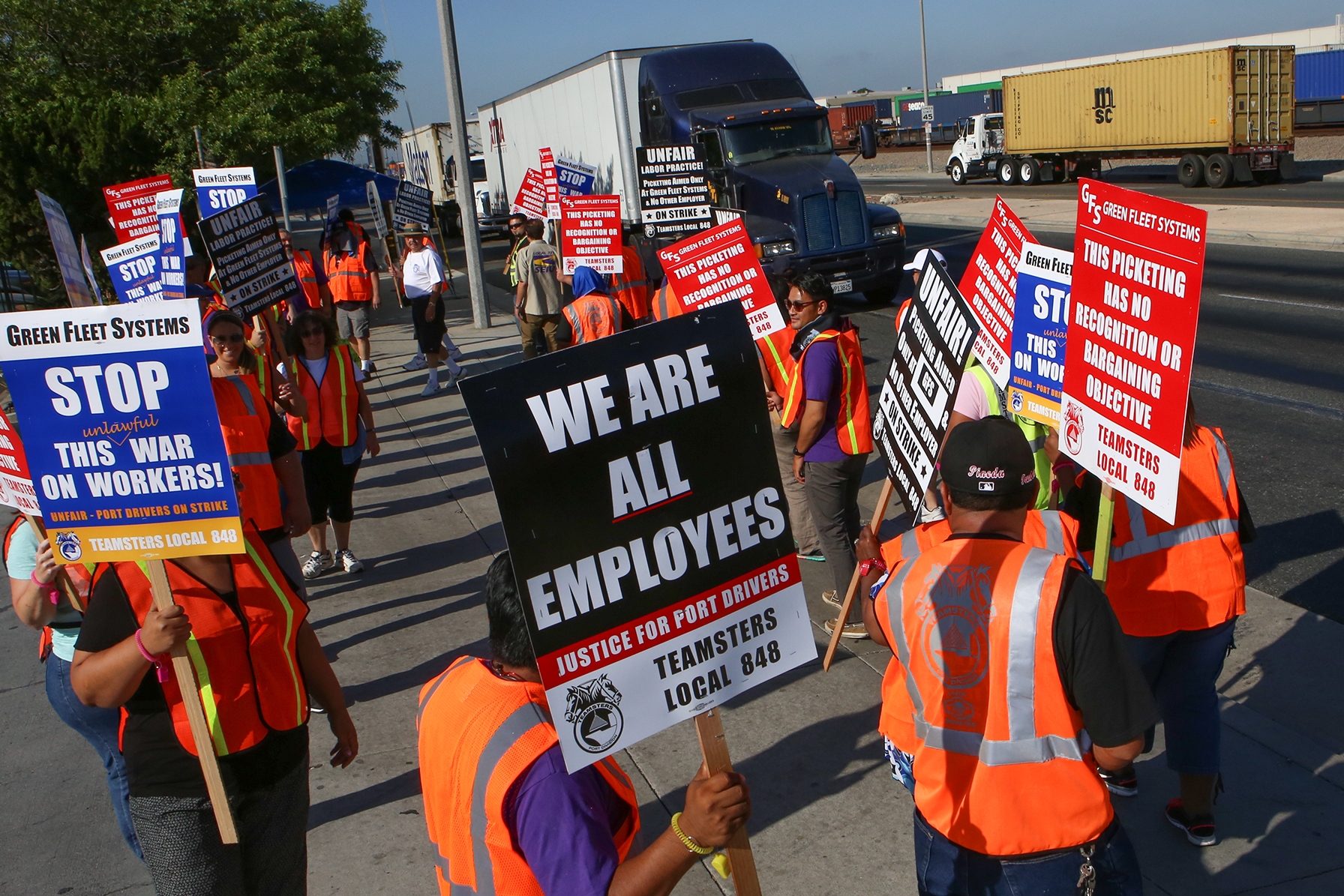
Truck driver strike spreads to intermodal rail yards from the docks, creating logistical nightmare before Black Friday
Commerce, CA – Early Tuesday morning, the port truck driver strike spread from the Ports of Los Angeles/Long Beach to intermodal rail yards that are serviced by Pacer Cartage and Harbor Rail Transport (HRT). These rail yards dispatch cargo to and from warehouses and distribution centers across America. Drivers intend to follow trucks from Pacer and HRT to customer locations, including the rail yards, and picket the trucks while they are working at those locations.
Like drivers at QTS Inc., LACA Express, and WinWin Logistics that went on strike Monday, drivers at Pacer and HRT are striking to end misclassification as “independent contractors,” a scam that has led to massive wage theft and denied drivers basic workplace protections such as safety and health regulations, disability insurance, workers compensation, and unemployment insurance
“We are sick of being trampled upon and mistreated,” said Humberto Canales, a misclassified “independent contractor” from Pacer Cartage. “We are joining the fight and coming out of the shadows to demand our rights as company employees to provide a better future for our families.”
“Now is the time to end this misclassification scheme and provide a better future for our families. These companies have gotten away with this scam for too long. It’s time to make a change,” said Alfredo Reyes of Harbor Rail Transportation.
What: Press conference with truck drivers from Pacer Cartage and Harbor Rail Transport.
Who: Striking port truck drivers from Pacer Cartage and Harbor Rail Transport.
Where: Union Pacific Railroad Truck Processing Entrance. 4341 East Washington Blvd, Commerce CA. Location is at the intersection of Indiana and Washington Blvd.
When: Tuesday, November 18, 2014; 6:30 AM PST
UNION MEETING TODAY 11/18/14 10:30
UNION MEETING TODAY
10:30 AM
Teamsters joint council # 42
981 Corporate Center Dr #200, DeVry University Pomona Campus,
Pomona, CA 91768

DIRECTIONS
FROM EAST LA
Commerce, CA
Get on I-710 N
1. Head south on S Eastern Ave toward E Washington Blvd
2. Take the 1st right onto E Washington Blvd
3. Turn right to merge onto I-710 N
Take CA-60 E/Pomona Fwy and I-10 E to Corporate Center Dr in Pomona. Take the CA-71 S
exit from I-10 E
4. Merge onto I-710 N
5. Take the exit onto CA-60 E/Pomona Fwy toward Pomona
6. Take the exit onto I-605 N
7. Take the exit onto I-10 E toward San Bernardino
8. Take the CA-71 S exit toward Corona
9. Keep right at the fork, follow signs for S Campus Dr
Turn right onto Corporate Center Dr
Destination will be on the right
981 Corporate Center Dr #200, DeVry University Pomona Campus,
Pomona, CA 91768
FROM COLTON
Bloomington, CA
Get on I-10 W
1. Head south on Cedar Ave
2. Turn right to merge onto I-10 W
Follow I-10 W to Fairplex Dr in Pomona. Exit from I-10 W
3. Merge onto I-10 W
4. Take the exit toward Fairplex Dr
5. Follow signs for Fairplex Dr
Take Murchison Ave and S Campus Dr to Corporate Center Dr
6. Turn left onto Fairplex Dr
7. Turn right onto Murchison Ave
8. Continue onto Ridgeway St
9. Turn right onto S Campus Dr
10. Turn right onto Corporate Center Dr
11. Make a U-turn
Destination will be on the right
981 Corporate Center Dr #200, DeVry University Pomona Campus,
Pomona, CA 91768
Gemco
Union Pacific Railroad Co
Get on CA-170 S
1. Head south on Van Nuys Blvd toward Keswick St
2. Turn left onto Sherman Way
3. Turn right to merge onto CA-170 S
Take CA-134 E and I-210 E to Valley Blvd in Pomona. Take the Valley Blvd exit from CA-71 S
4. Merge onto CA-170 S
5. Take the exit onto CA-134 E/Ventura Fwy toward Pasadena
Continue to follow CA-134 E
6. Merge onto I-210 E
7. Take the CA-57 S/Orange Freeway exit toward Santa Ana
8. Merge onto CA-57 S
9. Take the exit onto CA-71 S toward Corona
10. Take the Valley Blvd exit toward Holt Ave
Take Ridgeway St and S Campus Dr to Corporate Center Dr
11. Turn right onto Valley Blvd
12. Turn right onto Ridgeway St
13.Take the 2nd left onto S Campus Dr
14. Turn right onto Corporate Center Dr
15. Make a U-turn
Destination will be on the right
981 Corporate Center Dr #200, DeVry University Pomona Campus,
Pomona, CA 91768
B.O. cars?…engines? toepaths? No relief crew?
“WE” ARE THE UNION!…JUST LIKE THEY MAKE YOU DO YOUR JOB, MAKE THEM ACCOUNTABLE FOR NOT DOING THEIRS!


Activities after 12 hours of time on duty or the 24-hour point in a duty tour
• Waiting for and in deadhead transportation from duty to a point of final release is the
only allowable railroad-required activity after an employee has 12 hours of time on duty,
or after the 24-hour point in a duty tour. See Chapter 4, Deadhead from duty to a point of
final release.
• A train crew is not waiting for deadhead transportation when:
o Transportation has not been ordered for the crew, or transportation is available but
the crew is required to remain with the train.
In these circumstances, the crew is considered to be monitoring the train (which is
commingled service), NOT waiting for deadhead transportation, and this time will
count as time on duty.
HOS_Manual_Final_120213 (1)
BLET DIVISION 5 FAX (951) 676 1721
2015 BLET DIVISION 5 VACATION FORMS
HERE ARE YOUR 2015 VACATION FORMS.
PLEASE SEND THEM TO RON DANLY EMAIL PREZBLE5@DSLEXTREME.COM FAX 714 526 7870
BRIAN HESS EMAIL ENGINEERBRIAN@MSN.COM FAX 951 776 4230
PAULO TORTORICE LCDIV5@GMAIL.COM FAX 951 676 1721
THEY MUST BE RECEIVED BY 12:01 DECEMBER 01 2014

2015 DIVISION 5 VACATION FORM
division 5 vacation form scanned
JP016 RE31ADDING MORE TRAINS
BROTHERS
CMS HAS NOTIFIED US THEY WILL BE ADDING 5 NEW STARTS THIS WEEK (IVE ALREADY ADDED TWO TURNS) FOUR NEXT WEEK AND SIX THE FOLLOWING WEEK.
PLEASE ATTEND THE NEXT UNION MEETING WE WILL BE DISCUSSING THE MOST RECENT TRIP RATE OFFERED.
PAULO
 BLET Division 5
You must be logged in to post a comment.